
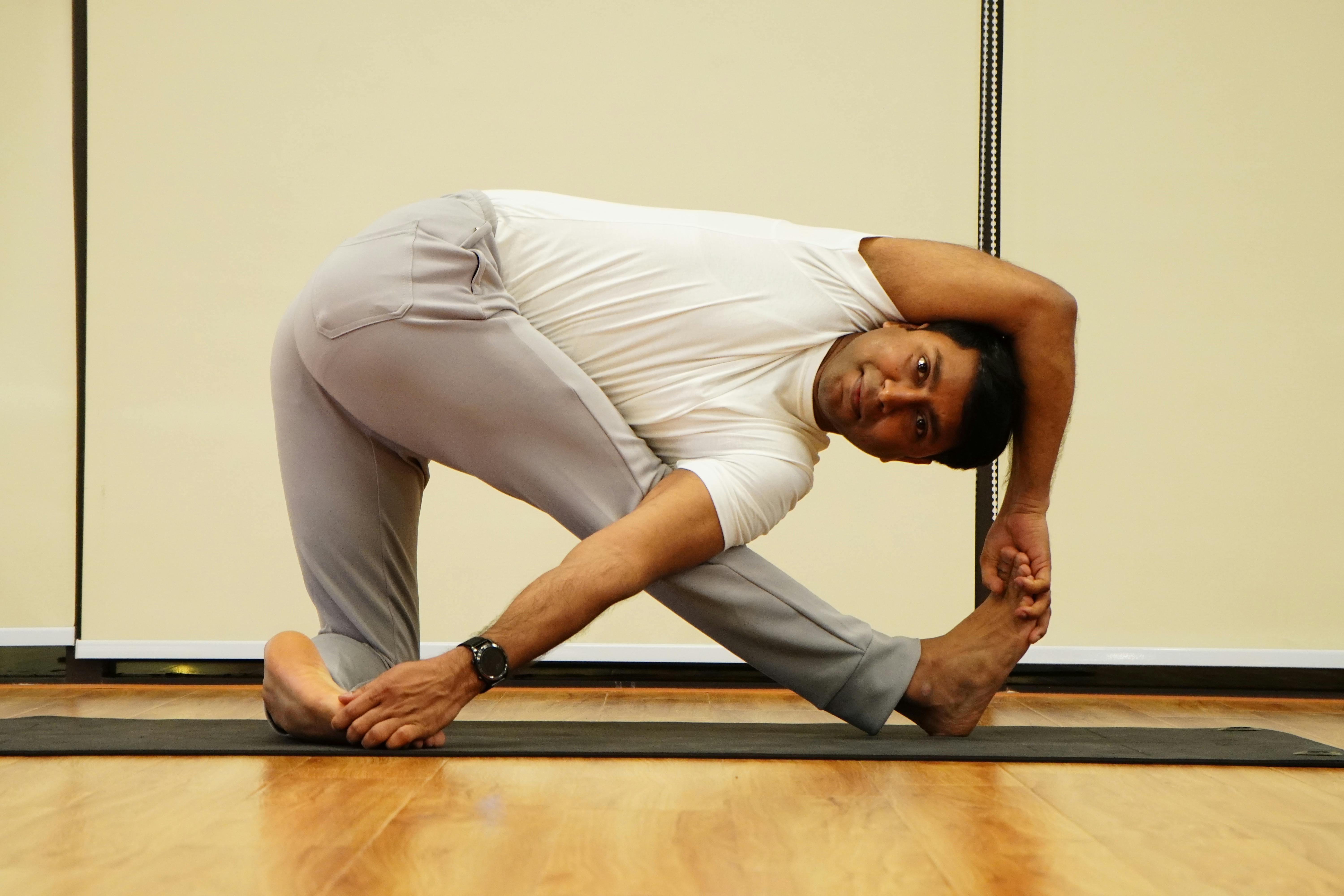
Two classes both described as yoga can have almost nothing in common in pace, temperature or content. The variation is a matter of lineage rather than of one form being a diluted version of another.
Modern postural yoga has a traceable history
The physically demanding forms familiar in studios developed largely in the twentieth century, drawing on older traditions alongside gymnastics and physical culture.
Several influential teachers trained in the same school and then established distinct systems abroad, each emphasising different aspects of what they had learned.
Most widely practised styles trace back to that small group, which is why they share recognisable postures while organising them in incompatible ways.
Fixed sequences against variable ones
Some systems use a set sequence performed in the same order every time, so progress is measured by depth and breath rather than by novelty.
Others build a different sequence for each class around a theme or a target posture, which allows adaptation but makes sessions harder to compare over time.
The choice has practical consequences: a fixed sequence supports self-practice without an instructor, while a variable one depends on the teacher's planning.
Pace determines what is being trained
Flowing styles link postures to breath with continuous movement, producing a sustained cardiovascular demand alongside the postural work.
Held styles maintain positions for minutes at a time, targeting connective tissue and tolerance of sustained sensation rather than circulation.
Restorative approaches support the body with props so that positions can be held without muscular effort at all, which makes them a different activity despite sharing vocabulary.
Heat and equipment change the practice
Heated rooms increase sweating and the perception of flexibility, since warm tissue deforms more readily under the same load.
That increased range is partly temporary, and the sensation of ease is not a reliable guide to what the joint is prepared to tolerate.
Prop-based approaches use belts, blocks and walls to hold precise alignment, prioritising position over range and making postures accessible to a wider range of bodies.
The philosophical content varies independently
Some classes include breathing practice, chanting or readings drawn from the tradition, while others present the same postures purely as exercise.
This dimension is not correlated with physical intensity, so a gentle class may be more traditional in content than a demanding one.
Because the label on a timetable conveys little of this, the useful questions before booking concern pace, heat and whether beginners are accommodated, particularly for anyone with a joint problem or a pregnancy who should also check with a clinician first.