
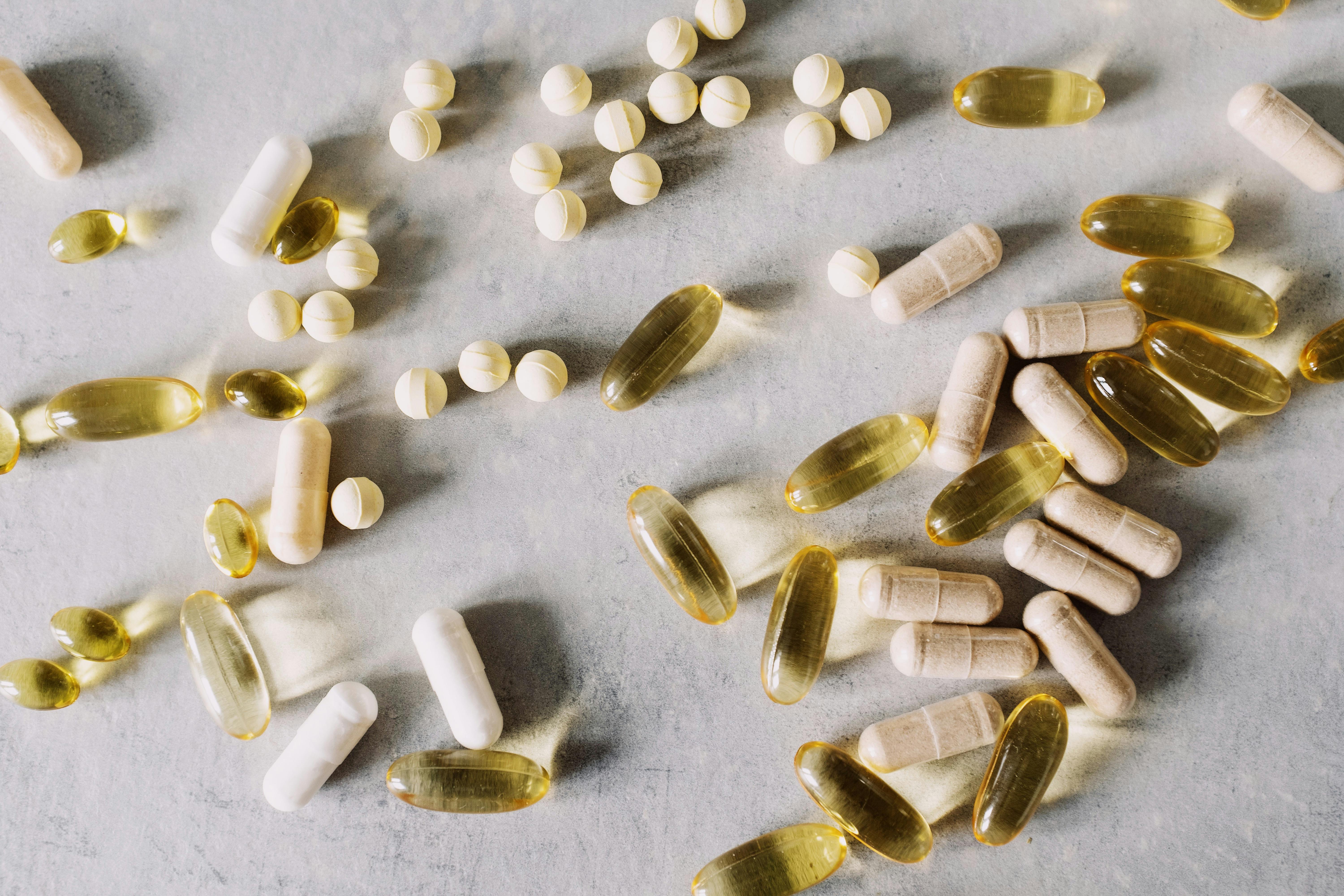
Herbal products are frequently treated as separate from medication, but many contain compounds active in the same systems that process prescribed drugs. The interactions that result are chemical rather than a matter of natural against synthetic.
A small set of liver enzymes clears most drugs
A family of enzymes in the liver chemically modifies the majority of oral medicines, converting them into forms the body can excrete.
The rate at which those enzymes work determines how much active drug remains in circulation and for how long, which is what dosing schedules are built around.
Any substance that changes their activity changes the effective dose of every medicine that depends on them, without a single tablet being altered.
Induction lowers drug levels
Some plant compounds increase production of these enzymes, so the body clears the drug faster and blood levels fall.
The consequence is treatment failure rather than obvious toxicity: a contraceptive, an anticoagulant or an anti-rejection drug may simply stop working well enough.
Because nothing feels wrong at first, the cause is often identified only after a clinical event, which is why this class of interaction is regarded seriously.
Inhibition raises drug levels
Other compounds block the same enzymes, slowing clearance so that drug concentrations climb above the intended range.
Grapefruit juice is the familiar example, and the same mechanism operates with a range of botanical extracts, particularly concentrated ones.
Medicines with a narrow margin between effective and harmful concentrations are where this matters most, since a modest change in clearance moves them out of range.
Some interactions are additive rather than metabolic
A herbal product may act on the same target as a drug, so effects add together without either being cleared differently.
Products affecting blood clotting, blood sugar or sedation are the common cases, and combining them with medicines aimed at the same processes can push the effect too far.
This route does not depend on liver enzymes at all, which is why checking only for metabolic interactions misses part of the picture.
Concentration and variability complicate prediction
A concentrated extract can contain many times the amount of active compound present in the traditional preparation of the same plant.
Content also varies with growing conditions, harvest and processing, so two products from the same plant can behave differently.
The practical response is to tell prescribers and pharmacists about every herbal product taken, including those regarded as food, because the interaction check depends on information they do not otherwise have.