
Cooking is often described as reducing the nutritional value of food, which is true for some nutrients and the reverse for others. The direction depends on the nutrient and on what heat does to the structure holding it.
Plant cell walls limit access
Nutrients inside plant cells sit behind walls made of material human enzymes cannot break down, so much of the content passes through undigested.
Heat softens and ruptures those walls, releasing the contents into a form digestive enzymes can reach, which is why cooked vegetables deliver more of certain compounds than raw ones.
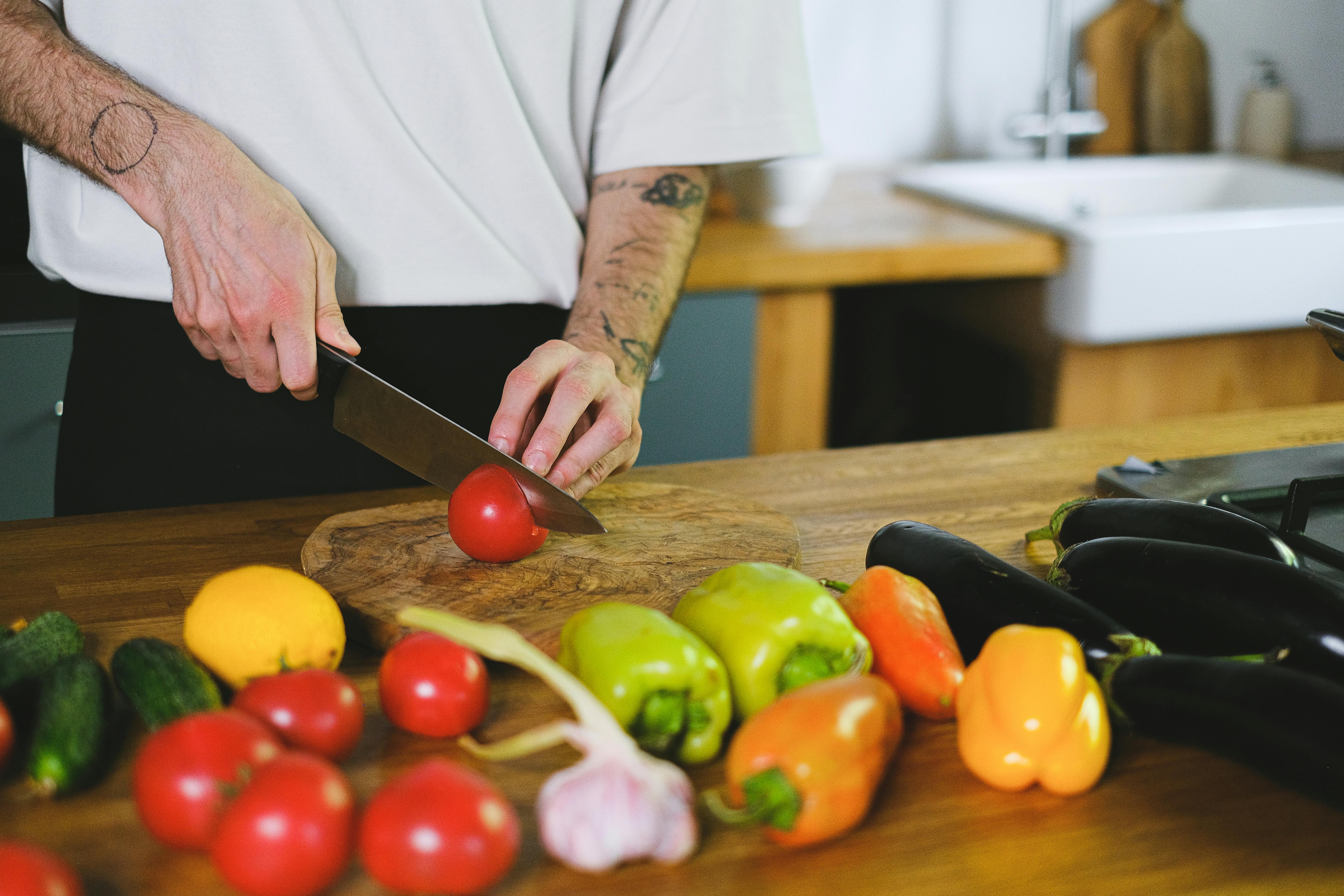
The carotenoids in tomatoes and carrots are the clearest example, becoming substantially more available after cooking despite the food appearing less fresh.
Water-soluble vitamins leave with the water
Vitamin C and several B vitamins dissolve readily, so boiling transfers a considerable part of them into the cooking water.
Losses are driven by the volume of water, the surface area exposed and the duration of heating, which is why steaming and rapid methods retain more than long boiling.
Where the cooking liquid is consumed, as in a soup or stew, much of what leached out is still eaten, so the loss depends on the dish rather than the method alone.
Starch structure changes with heat and cooling
Raw starch granules are tightly packed and poorly digested; heating with water swells and opens them, making the starch rapidly digestible.
Cooling cooked starch allows part of it to recrystallise into a form that resists digestion and behaves more like fibre in the large intestine.
This is why a cooled and reheated potato or rice dish produces a different glucose response from the same food eaten hot, without any change in what was bought.
Protein unfolds and becomes easier to digest
Heat unfolds protein structures, exposing the chains to digestive enzymes and increasing the proportion broken down and absorbed.
Cooking also inactivates compounds in raw legumes and eggs that interfere with digestion or with the absorption of particular nutrients.
At high temperatures proteins react with sugars to create the browning that carries most of cooked food's flavour, a reaction that also destroys a portion of certain amino acids.
Method matters more than cooked against raw
Very high dry heat, particularly charring of meat, generates compounds that have prompted advice to limit heavily blackened cooking.
Gentler wet methods preserve more of the heat-sensitive vitamins while still delivering the structural changes that improve availability.
The practical implication is that variety in preparation is more useful than choosing a single method, since no one approach is best for every nutrient in every food.