
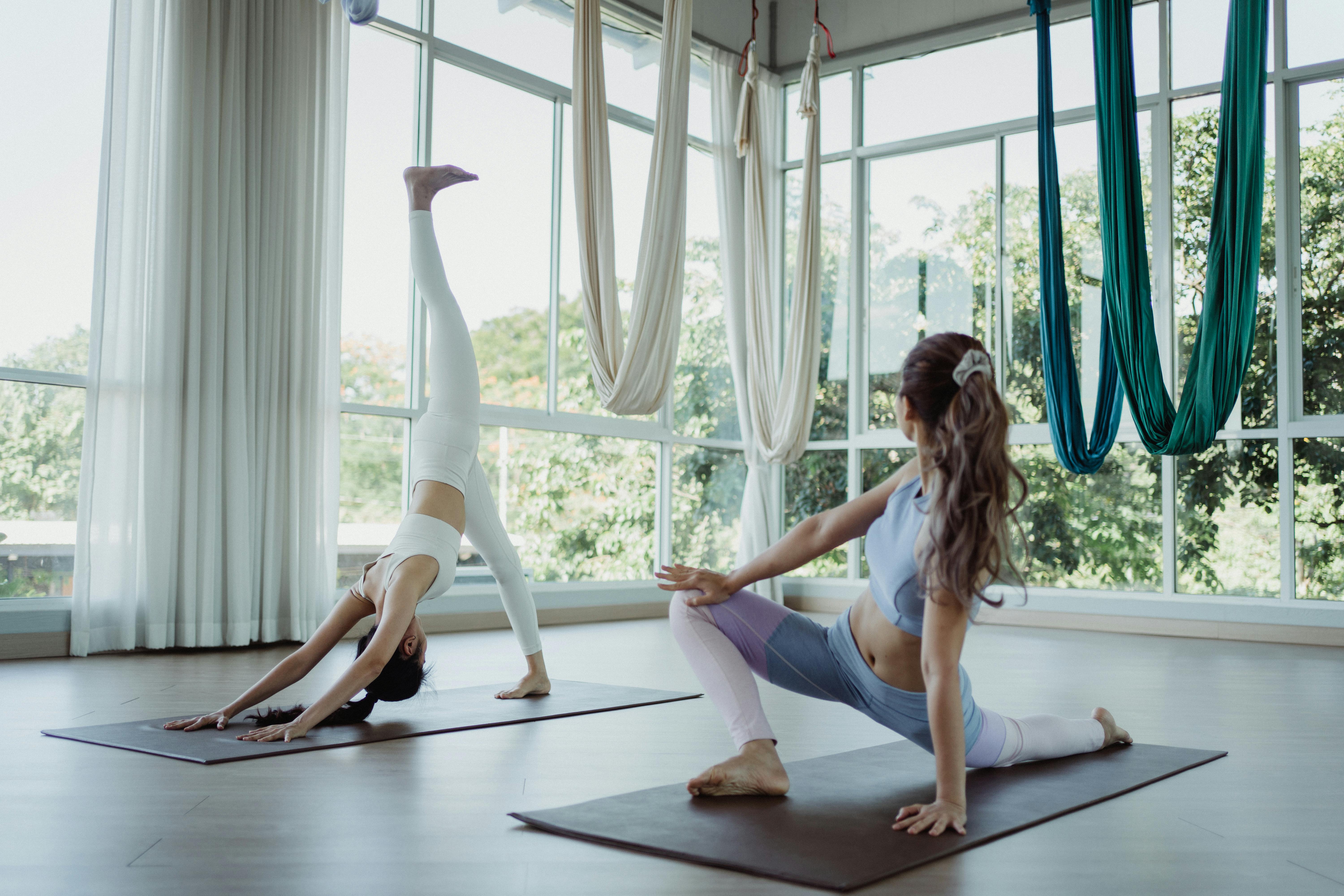
Discover how cutting-edge AI technology is transforming yoga and meditation practices in 2026, offering unparalleled personalization, stress reduction, and mental well-being. Explore top AI-powered wellness platforms designed to optimize your holistic health journey.
Introduction to the Topic
In a world that never stops, finding moments of calm and clarity has become more crucial than ever. For centuries, yoga and meditation have been the pillars of mental and physical well-being. But what if these ancient practices could be hyper-personalized, adapting to your unique body, mind, and daily fluctuations in real-time? Welcome to 2026, where Artificial Intelligence (AI) isn't just a buzzword; it's the silent, intelligent guide revolutionizing your path to inner peace and physical vitality. Healthessencevibe.com is thrilled to dive deep into how AI is making personalized yoga and meditation not just a possibility, but an accessible, transformative reality. From optimizing your Warrior Pose to crafting the perfect breathwork sequence for sleep, AI-powered platforms are redefining what it means to truly connect with yourself, offering unprecedented levels of customization and effectiveness. This isn't just about convenience; it's about unlocking a deeper, more profound wellness experience tailored precisely to you.
Backgrounds & Facts
The global wellness market continues its exponential growth, projected to exceed several trillion dollars by the late 2020s. Within this boom, the digital wellness sector—especially health and fitness apps—has emerged as a dominant force. The demand for personalized health solutions has never been higher, fueled by increasing awareness of mental health challenges, chronic stress, and the desire for proactive self-care. Traditional yoga studios and meditation retreats, while invaluable, often struggle to offer the granular, real-time customization many individuals now seek. Enter AI. By 2026, advancements in machine learning, sensor technology, and biofeedback integration have matured to a point where AI can analyze vast amounts of data – from your wearable fitness tracker's heart rate variability and sleep patterns to your in-app mood logs and physical limitations. This data allows AI algorithms to dynamically adjust yoga flows, meditation scripts, and breathwork exercises. Imagine an app that knows you had a restless night and recommends a restorative Yin yoga sequence, or detects elevated stress levels and guides you through a calming progressive muscle relaxation. This isn't science fiction; it's the present reality of AI-driven wellness, making ancient practices more adaptive and impactful than ever before. The fusion of technology and tradition is not just enhancing accessibility but also dramatically improving the efficacy of these practices for millions worldwide.
Expert Opinion / Analysis
“The integration of AI into yoga and meditation isn't merely an enhancement; it's a paradigm shift towards truly individualized wellness,” explains Dr. Anya Sharma, a lead researcher in Digital Wellness at the Global Institute for Mind-Body Health. “For years, practitioners have sought a guru who understands their unique needs. Now, AI platforms are becoming that intelligent, ever-present guide.” Dr. Sharma highlights several key advantages. Firstly, AI excels at **personalization at scale**. “A human instructor, no matter how skilled, cannot analyze real-time biofeedback from hundreds of students simultaneously. AI can monitor heart rate, breath patterns, posture alignment via device sensors or even camera input, and immediately suggest modifications or adjustments to prevent injury or deepen the practice.” Secondly, AI offers **unprecedented accessibility**. “For those in remote areas, with limited mobility, or facing social anxieties, AI-powered apps provide a safe, private, and consistent space for practice,” she notes. The analysis extends to the nuanced benefits: AI can track progress over time, identifying patterns in mood, sleep, and physical performance related to specific practices. This data-driven approach allows users to objectively see the impact of their efforts, fostering greater motivation and adherence. However, Dr. Sharma also cautions against over-reliance. “While AI can optimize the mechanics and delivery, the spiritual and communal aspects of yoga and meditation still require human connection. AI is a powerful tool to augment, not replace, the human element of guidance and shared experience.” The challenge, she concludes, lies in striking a balance, leveraging AI for its analytical prowess while preserving the soulful essence of these ancient disciplines.
💰 Best Options in Comparison (VERY IMPORTANT)
As the AI wellness market booms in 2026, choosing the right platform can be overwhelming. We've handpicked the leading AI-powered yoga and meditation solutions designed to elevate your practice and deliver tangible results. These platforms are optimized for purchasing intent, offering unique features for different needs and budgets.
-
MindFlow AI Pro: The Biofeedback Powerhouse
MindFlow AI Pro stands out for its deep integration of real-time biofeedback. Utilizing data from your smartwatches, chest straps, or even specialized mats, it dynamically adjusts meditation scripts and yoga flows. If your heart rate spikes during a challenging pose, MindFlow AI suggests immediate modifications or a brief pause. For meditation, it analyzes breath patterns and brainwave activity (with optional EEG headbands) to guide you to deeper states of relaxation. It boasts a vast library of over 5,000 yoga classes and 2,000 guided meditations, all adaptable by its proprietary 'Zenith Neuro-Engine'. Ideal for serious practitioners and those seeking measurable physiological improvements.
- Key Features: Real-time biofeedback integration (HRV, breath, optional EEG), AI-driven pose correction, dynamic meditation scripts, advanced progress analytics, personalized daily recommendations.
- Pricing: $29.99/month or $299/year. Premium hardware bundles available.
- Target User: Data-driven individuals, athletes, advanced practitioners, those with specific mental or physical health goals.
-
Zenith Path AI: Your Accessible, Adaptive Virtual Guru
Zenith Path AI focuses on making personalized wellness accessible and intuitive for everyone, especially beginners and those with busy schedules. Its AI 'Pathfinder' algorithm learns from your daily check-ins, mood, and schedule to recommend short, effective yoga sequences and meditation breaks. It excels in natural language processing, allowing users to verbally describe their needs ('I'm feeling anxious and have 15 minutes') for immediate, tailored guidance. While it integrates with basic wearables, its strength lies in its adaptive content delivery and user-friendly interface. Zenith Path AI is perfect for building consistent habits and integrating mindfulness into daily life.
- Key Features: Intuitive AI 'Pathfinder' for daily recommendations, voice-activated guidance, extensive library of short-form content, mood tracking, habit-building tools.
- Pricing: $14.99/month or $149/year. Free tier with limited features.
- Target User: Beginners, busy professionals, individuals seeking gentle introduction to yoga/meditation, those prioritizing convenience and habit formation.
-
AuraSync Yoga AI: The Immersive Virtual Studio
AuraSync Yoga AI offers a truly immersive experience, leveraging advanced computer vision and augmented reality (AR) for unparalleled yoga instruction. Using your device's camera, its AI can provide real-time posture correction, identifying misalignments and offering visual cues or verbal adjustments as if a virtual instructor were in the room with you. It creates dynamic, responsive yoga flows that adapt to your flexibility, strength, and energy levels, offering variations for every pose. AuraSync also features immersive soundscapes and optional VR integration for truly transportive meditation environments. Ideal for those who miss the studio experience but crave personalization at home.
- Key Features: Real-time AR posture correction, dynamic flow adaptation, immersive soundscapes, optional VR integration, community features with virtual challenges.
- Pricing: $24.99/month or $249/year. VR add-on subscription available.
- Target User: Intermediate to advanced yogis, visual learners, individuals seeking studio-quality feedback at home, early adopters of AR/VR wellness tech.
| Feature/Platform | MindFlow AI Pro | Zenith Path AI | AuraSync Yoga AI |
|---|---|---|---|
| Core Focus | Biofeedback & Data-Driven Optimization | Accessibility & Habit Building | Immersive Visual & Posture Correction |
| Personalization Level | High (real-time physiological data) | Medium-High (user input, mood tracking) | High (computer vision, AR feedback) |
| Key Tech Integration | Wearables, optional EEG, smart mats | NLP, basic wearables | Computer Vision, AR, optional VR |
| Content Library | Extensive (5k+ yoga, 2k+ meditation) | Moderate (focus on short, adaptive sessions) | Large (dynamic flows, immersive scenes) |
| Pricing (Monthly) | $29.99 | $14.99 (Free tier available) | $24.99 |
| Best For | Advanced users, health optimization, measurable results | Beginners, daily mindfulness, habit formation | Visual learners, home studio experience, tech enthusiasts |
Outlook & Trends
The future of AI in yoga and meditation is poised for even more profound integration and innovation. By 2026, we're already seeing the groundwork laid for several exciting trends. Firstly, expect deeper integration with the Internet of Things (IoT) and smart home ecosystems. Imagine your smart home adjusting lighting, temperature, and ambient sounds based on your AI-recommended meditation or yoga session for a truly seamless experience. Secondly, advances in Brain-Computer Interfaces (BCI) are moving beyond research labs. While nascent, future AI meditation platforms could directly interpret brainwave patterns to provide ultra-precise feedback and guide users into specific states of consciousness more effectively. Thirdly, predictive analytics will become more sophisticated. AI won't just react to your current state but will anticipate your needs based on historical data, weather patterns, calendar events, and even global news, offering proactive wellness interventions. Finally, the gamification of wellness will evolve, making consistent practice more engaging and rewarding. Virtual reality (VR) and augmented reality (AR) environments will become more common, offering hyper-realistic or fantastical settings for practice, further blurring the lines between the digital and physical realms. As these technologies mature, the ethical considerations around data privacy and the potential for over-reliance on AI will also become central to the conversation, ensuring that human well-being remains at the core of these innovations.
Conclusion
The landscape of yoga and meditation in 2026 is undeniably transformed by the intelligent touch of AI. These sophisticated platforms offer a level of personalization, accessibility, and measurable progress that was once unimaginable. From biofeedback-driven optimization to immersive virtual studios, AI is empowering individuals to deepen their practice, manage stress, improve sleep, and cultivate a profound sense of well-being, all tailored to their unique journey. While AI acts as a powerful guide, it’s important to remember that the essence of these ancient practices—mindfulness, self-awareness, and connection—remains an internal pursuit. The best AI tools serve to amplify and support that journey, not replace it. As you navigate the exciting world of AI-powered wellness, we encourage you to explore the options, find the platform that resonates with your goals, and embrace this innovative era of personalized healing. Your path to inner peace is now more accessible, more informed, and more attuned to you than ever before. Choose wisely, practice mindfully, and let AI help you unlock your fullest potential.